Informational Categories of Men's Dietary Supplements

An educational overview of six nutrient categories commonly referenced in men's health and nutritional science. All content is informational. No products are sold or recommended.

Six Key Nutrient Categories

Each of the following categories represents a broad domain of nutritional science relevant to men's general well-being. The descriptions below are educational in nature. They describe general nutrient functions and food-based sources, not specific product recommendations.

Artistic flat-lay of a wide variety of vibrant whole foods including leafy greens, bright berries, whole grains, and legumes arranged symmetrically on a white marble surface with soft studio lighting

Multivitamin & Mineral Complexes

Multi-nutrient formulations are among the most widely studied category of dietary supplements. They aim to provide a broad-spectrum array of vitamins and minerals in a single preparation, addressing potential gaps across multiple nutrient categories simultaneously.

  • Core Components: Vitamins A, C, D, E, K, B-complex group, zinc, magnesium, selenium, calcium, iodine.
  • Physiological Context: Supports broad micronutrient coverage where dietary variety may be insufficient to meet reference nutrient intakes across all categories.
  • Natural Food Sources: Diverse whole food intake — fruits, vegetables, whole grains, lean proteins, dairy, and legumes — represents the primary dietary pathway for these nutrients.

Learn More
Peaceful early morning scene with sunlight streaming over rolling hills through light mist, casting long golden rays across open grassland, symbolising natural vitamin D and the importance of sun exposure

Vitamin D & K2 Combinations

Vitamin D3 (cholecalciferol) and vitamin K2 (menaquinone) are fat-soluble vitamins that function synergistically in calcium metabolism and bone mineralisation. This combination has become a prominent subject of nutritional research in recent years, particularly in the context of northern latitudes with limited sun exposure.

  • Core Components: Cholecalciferol (D3), menaquinone-7 (MK-7 form of K2).
  • Physiological Context: Vitamin D facilitates calcium absorption from the gut; vitamin K2 is involved in directing calcium to appropriate tissues including bone and away from arterial walls.
  • Natural Food Sources: Oily fish, egg yolks, and liver for D3; fermented foods including natto, certain cheeses, and egg yolks for K2.
Learn More
Deep ocean scene with clear blue water and light refracting below the surface, with a macro shot of golden fish oil capsules on a wooden board in the foreground, symbolising marine omega-3 sources

Omega-3 Fatty Acids

Omega-3 polyunsaturated fatty acids — principally eicosapentaenoic acid (EPA) and docosahexaenoic acid (DHA) — are essential fats that the body cannot synthesise in adequate quantities. They are among the most extensively studied nutrients in the scientific literature and are integral to cell membrane structure throughout the body.

  • Core Components: EPA (eicosapentaenoic acid), DHA (docosahexaenoic acid), ALA (alpha-linolenic acid).
  • Physiological Context: Omega-3 fatty acids are structural components of cell membranes and are precursors to various signalling molecules involved in inflammatory and immune processes.
  • Natural Food Sources: Oily fish (salmon, mackerel, sardines, herring), algae (primary biosynthetic source), walnuts, and flaxseeds for ALA.
Learn More
Macro photograph of dark pumpkin seeds and whole almonds scattered on a rough dark stone slate with dramatic side lighting casting long textured shadows, representing zinc and magnesium rich foods

Zinc & Magnesium Formulations

Zinc and magnesium are two of the most frequently studied minerals in men's nutritional science. Both are involved in a substantial number of enzymatic and physiological processes, and both are identified in national dietary surveys as minerals for which population intake may fall below reference values.

  • Core Components: Zinc (various forms including citrate, picolinate, bisglycinate), magnesium (citrate, glycinate, malate, oxide).
  • Physiological Context: Zinc supports immune function, protein synthesis, and enzymatic catalysis; magnesium functions as a cofactor in ATP production, muscle function, and nervous system regulation.
  • Natural Food Sources: Shellfish, meat, legumes, and seeds for zinc; leafy greens, nuts, seeds, whole grains, and legumes for magnesium.
Learn More
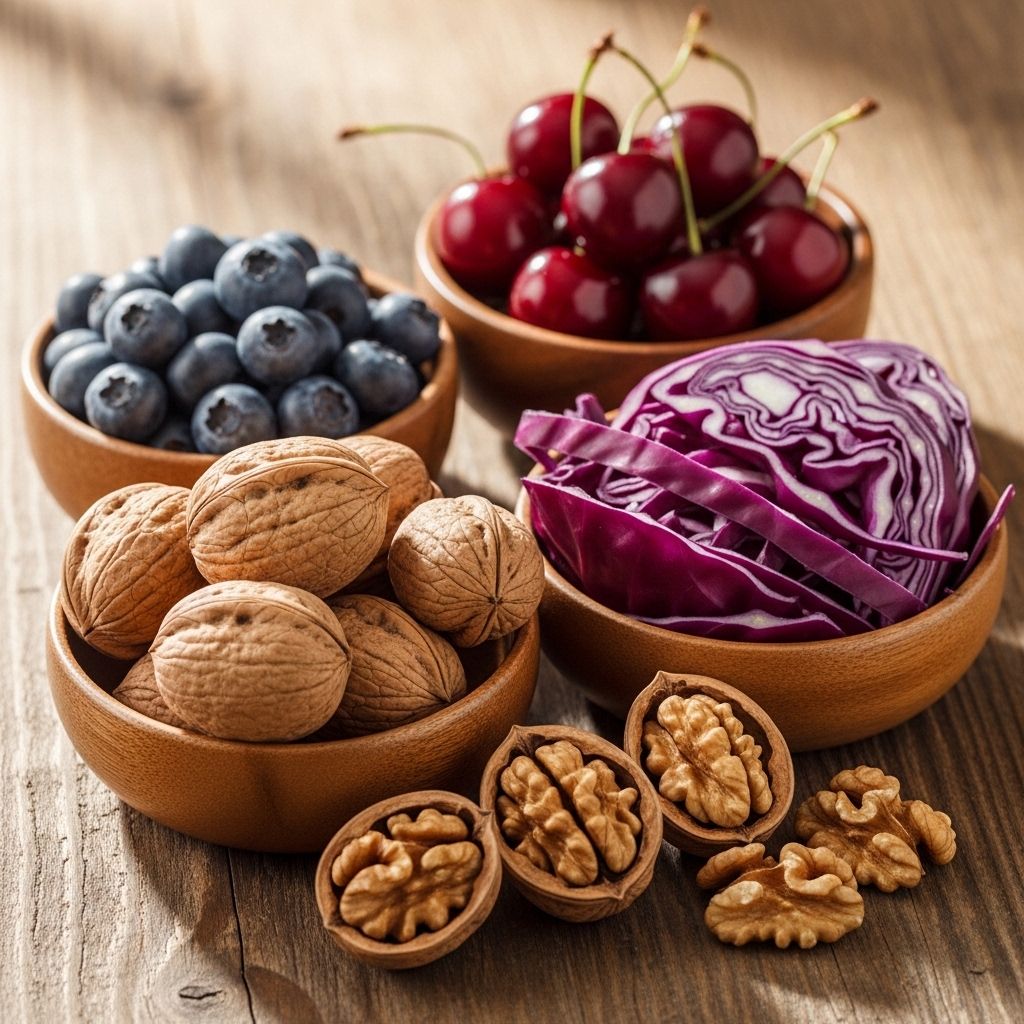
Rich composition of deep coloured antioxidant-rich foods including blueberries, dark cherries, red cabbage, and walnuts artfully arranged in small wooden bowls on a rustic surface with warm natural light

Antioxidant Complexes

Antioxidant supplement formulations typically combine several compounds with distinct mechanisms of free radical neutralisation. The scientific rationale for antioxidant supplementation is rooted in the concept of oxidative stress — an imbalance between pro-oxidant and antioxidant activity within cells — which has been studied in relation to various aspects of physiological function.

  • Core Components: Vitamins C and E, selenium, CoQ10, alpha-lipoic acid, resveratrol, green tea extract (EGCG).
  • Physiological Context: Different antioxidants operate in different cellular compartments — water-soluble (vitamin C) in the cytoplasm, fat-soluble (vitamin E, CoQ10) in membranes — providing complementary protective coverage.
  • Natural Food Sources: Colourful fruits and vegetables, particularly berries, citrus, tomatoes, leafy greens, nuts, and green tea.
Learn More
Moody atmospheric close-up of dried ashwagandha root and rhodiola rosea plant specimens with dark earthy background and warm directional amber lighting highlighting natural botanical textures

Adaptogenic Botanical Extracts

Adaptogenic botanicals represent a category of plant-derived preparations that have been the subject of scientific investigation for their potential to support the body's physiological response to various forms of stress. The term "adaptogen" was first formalised in Soviet-era pharmacological research and has since been adopted into broader nutritional science literature.

  • Core Components: Ashwagandha (Withania somnifera), Rhodiola rosea, Panax ginseng, Eleuthero (Siberian ginseng), Maca (Lepidium meyenii).
  • Physiological Context: Research has examined the effects of adaptogenic extracts on markers of physiological stress response, cognitive function, and energy metabolism across various study designs.
  • Natural Food Sources: These compounds are primarily obtained through the concentrated root, leaf, or bark extracts of specific plant species rather than through standard dietary consumption.
Learn More

Information & Context

All categories presented on this page are described for general educational and informational purposes only. Qojune does not sell, endorse, or recommend specific products within any of these categories. Descriptions of physiological functions and research contexts are general in nature and do not constitute guidance for supplementation or personal health decisions. A qualified healthcare professional or registered dietitian is the appropriate source of individual nutritional guidance.

Understand the Broader Context

For a deeper understanding of the scientific and regulatory landscape surrounding dietary supplements, explore the informational resources available throughout Qojune.

Educational content only. No guaranteed outcomes.